
California nurse to patient ratios are not a scheduling preference or a unit goal. They are a legal minimum, set by state regulation, and they apply on every shift in every general acute care hospital in the state. If you are an RN weighing a job offer, or an administrator building a schedule that has to hold up, the numbers below — and the rules around them — are worth knowing exactly. Here is the plain-English version.
Pure Heart Staffing places RNs, LVNs, and allied health professionals with hospitals, FQHCs, and community health organizations across Sacramento and the Bay Area. This is a practical look at what the ratios cover, and what they do not.
Where the Ratios Came From
California passed AB 394 in 1999, directing the state to set minimum licensed nurse-to-patient ratios for acute care hospitals. The regulations took effect in January 2004 and live in Title 22, Section 70217 of the California Code of Regulations. California was the first state to write numeric staffing minimums into law, and the Title 22 staffing ratios remain the most detailed framework of their kind.
The reasoning was straightforward. Staffing decisions made unit by unit and shift by shift were producing wide variation in how many patients a single nurse carried. A legal floor removes that variation at the bottom end, where it does the most damage.
California Nurse-to-Patient Ratios by Unit
These are the licensed-nurse minimums. One nurse may not be assigned more than:
- Intensive care and neonatal ICU — 2 patients
- Operating room — 1 patient
- Post-anesthesia recovery — 2 patients
- Labor and delivery — 2 patients
- Antepartum — 4 patients
- Postpartum, mother-baby couplets — 4 couplets
- Pediatrics — 4 patients
- Emergency department — 4 patients, dropping to 2 for critical care patients and 1 for trauma patients
- Step-down — 3 patients
- Telemetry — 4 patients
- Specialty care, including oncology — 4 patients
- Medical/surgical — 5 patients
- Psychiatric — 6 patients
Telemetry, step-down, and specialty care units all tightened on January 1, 2008, which is why older reference charts still circulating online show telemetry at 5 and step-down at 4. If a recruiter or a unit manager quotes you those numbers, they are working from outdated information.
RN or LVN? The 50 Percent Rule
These are licensed nurse ratios, so LVNs can count toward them — but only up to half the licensed nurses assigned to a unit, and only where the hospital’s patient classification system does not call for an RN. Some assignments stay RN-only regardless: the newborn ICU, emergency department triage, and critical trauma patients. If you are an LVN being counted in a ratio, it is fair to ask how the unit tracks that split.

The Part That Trips People Up: At All Times
The ratios must be met at all times. Not as an average across a shift, and not with an exception carved out for meal periods. When a nurse steps away for a break, another licensed nurse has to carry that assignment at the same ratio. This is the single most contested piece of the rule and the most common place where a schedule that looks compliant on paper comes apart in practice.
For nurses, this is worth asking about plainly in an interview: who covers breaks, and is that coverage built into the staffing plan or pulled off another assignment? The answer tells you a great deal about how the unit actually runs.

Ratios Are a Floor, Not a Target
Nothing in the regulation says five medical/surgical patients is the right assignment. It says six is not permitted. Hospitals are separately required to run a patient classification system that accounts for acuity, and to staff above the minimum when acuity calls for it.
So safe staffing in California really means two things at once: the numeric minimum, and a documented acuity judgment layered on top of it. A nurse who knows only the first number knows only half the rule.
Where the Ratios Do Not Apply
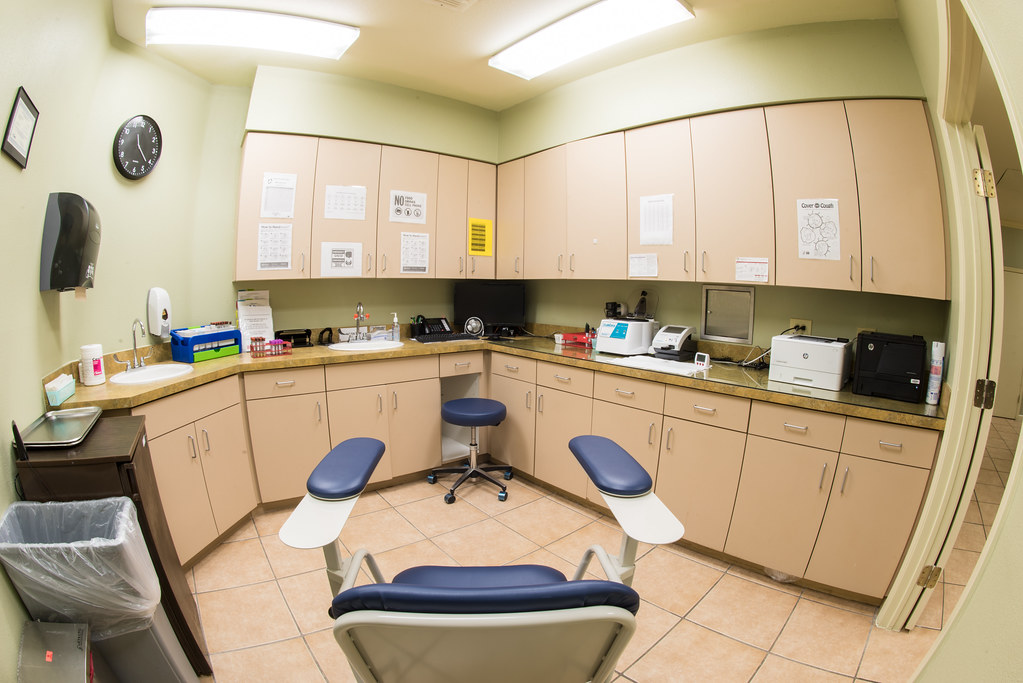
This catches a lot of clinicians moving between settings. Title 22 ratios govern general acute care hospitals. They do not govern:
- Outpatient clinics and FQHCs, where staffing follows provider schedules, visit volume, and care-team design
- Skilled nursing facilities, which are held to a minimum of 3.5 direct care service hours per patient day rather than a nurse-to-patient ratio
- Home health, correctional health, and behavioral health programs outside a licensed acute psychiatric unit
That is not an argument against those settings. Community health work in Sacramento is some of the most rewarding clinical work available, and plenty of the nurses we place have left hospital floors for it on purpose. But if you are used to the protection a hard ratio gives you, understand that it does not travel with you. Ask a clinic directly how it sets panel size and care-team ratios, and how it handles a day when two people call out.
What Happens When a Hospital Falls Short
The ratios are enforceable, not advisory. Anyone, including a staff nurse, can file a complaint with the California Department of Public Health, and CDPH is required to assess an administrative penalty of $15,000 for a first violation and $30,000 for each one after that, with additional penalties available where understaffing directly caused patient harm.
Most nurses raise it internally first, through the charge nurse or a staffing committee, and put the assignment in writing. Knowing the escalation path exists tends to change the conversation even when you never use it.
What This Means If You Are Staffing a Unit
For administrators, the ratios shape more than compliance paperwork. They shape how much flexibility you actually have. A unit scheduled at bare minimum has no absorptive capacity, so a single call-out becomes a compliance problem rather than an inconvenience. Facilities that maintain a small bench of credentialed per diem nurses tend to hold the line more easily and spend less on last-minute premium coverage over the course of a year.
If you run a clinic or an FQHC, the ratios do not bind you, but the underlying logic still does. Care teams that carry too much for too long leave, and replacing them costs considerably more than covering them. That is the calculation we help facility leaders run.
California Nurse-to-Patient Ratios: Frequently Asked Questions
What is the nurse-to-patient ratio for medical-surgical units in California?
One licensed nurse to five patients, the standard since January 2005. Like every other unit ratio, it applies at all times rather than as a shift average.
Do California nurse-to-patient ratios apply during breaks and lunches?
Yes. The ratio must be maintained at all times, so another licensed nurse has to carry the assignment while a nurse is on break. Coverage pulled off another full assignment does not satisfy the rule.
Do nurse-to-patient ratios apply to clinics and FQHCs in California?
No. Title 22 ratios govern general acute care hospitals. Outpatient clinics, FQHCs, home health, and skilled nursing facilities are staffed under different standards, so ask a clinic directly how it sets panel size and care-team ratios.
What happens if a California hospital violates nurse staffing ratios?
Anyone can file a complaint with the California Department of Public Health. CDPH is required to assess a $15,000 penalty for a first violation and $30,000 for each subsequent one, with additional penalties where understaffing directly caused patient harm.
Ready to Talk?
If you are an RN thinking about your next move in Sacramento or the Bay Area — hospital, clinic, or community health — text or call us at (916) 796-4020, or start an application. We will tell you honestly what a unit’s staffing really looks like, including the times when the honest answer is that you are better off where you are.
If you are a facility leader trying to build coverage that survives call-outs and leaves, reach out through pureheartstaffing.com. We will give you a straight assessment of what your staffing gaps actually need, without a pitch attached.
Pure Heart Staffing | With Your Best Interest at Heart | pureheartstaffing.com